
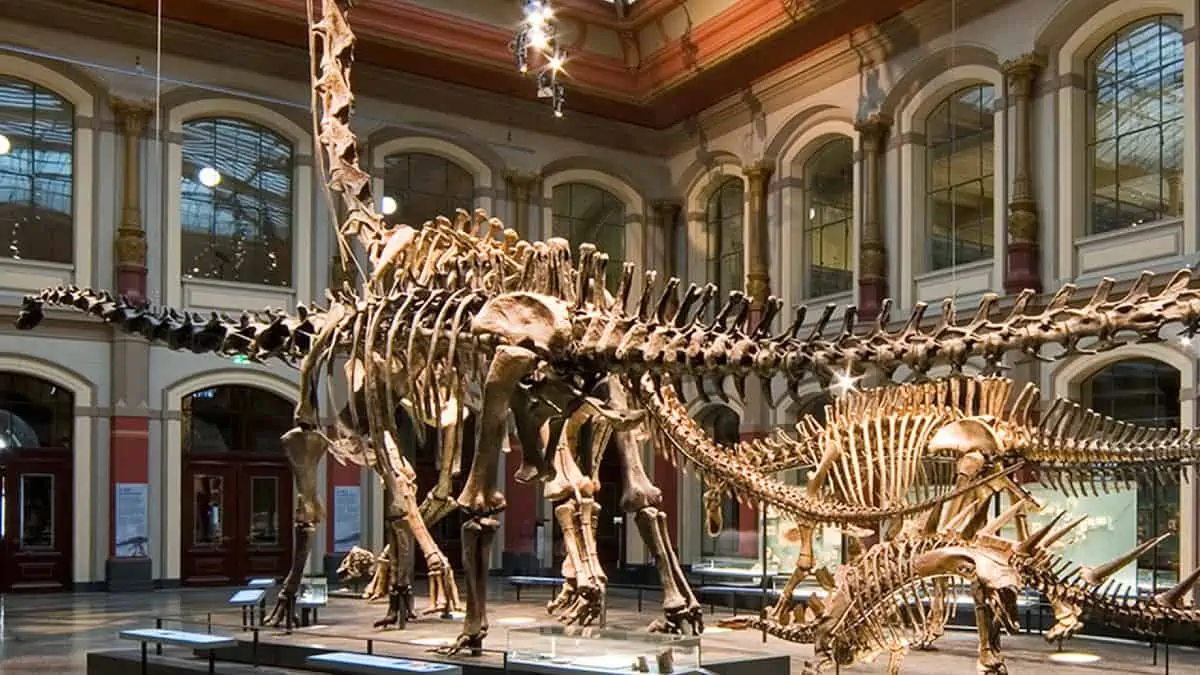
The Museum für Naturkunde (Natural History Museum) in Berlin is one of the most significant research museums in the world, holding a collection of over 30 million specimens. Located in the Mitte district, it is famous for its spectacular dinosaur skeletons, the biodiversity wall, and its research into the evolution of the Earth and life itself. It combines 19th-century architecture with modern scientific presentation.
What to expect at Natural History Museum
This museum is a favorite for families and science enthusiasts alike, offering a mix of jaw-dropping visuals and deep scientific context.
- The Dinosaur Hall: This is the heart of the museum. Upon entering, you are immediately greeted by the Giraffatitan brancai, the tallest mounted dinosaur skeleton in the world, standing at over 13 meters high. This hall also houses Tristan Otto, one of the world’s best-preserved Tyrannosaurus rex skeletons (subject to touring schedules, but a primary resident).
- The Biodiversity Wall: A stunning visual display featuring roughly 3,000 preserved animals—from beetles to big cats—arranged artistically behind glass to showcase the sheer variety of life on Earth.
- The Wet Collection: One of the most modern and architecturally impressive wings of the museum. It houses over one million zoological specimens preserved in alcohol (ethanol) in clear jars. Visitors can walk around this glass-walled, climate-controlled archive and see rows upon rows of jars containing fish, reptiles, and invertebrates.
- System Earth: A dynamic exhibition that explains how our planet works, featuring a giant multimedia globe and exhibits on plate tectonics, volcanoes, and the formation of mountains.
- Cosmos & Solar System: This section features the largest collection of meteorites in Germany, explaining the origins of our solar system and the impacts that have shaped Earth’s history.
- Masterpieces of Taxidermy: The museum is renowned for its high-quality taxidermy, including “Bobby” the gorilla and the famous polar bear “Knut.”
Where to book tickets
- Online (Recommended): The most efficient way to visit is by purchasing tickets via the official Museum für Naturkunde online shop. This allows you to select a specific time slot, which is crucial for skipping the often long lines at the ticket counter, especially on weekends.
- On-Site: Tickets can be bought at the museum entrance. However, capacity is limited, and during school holidays or rainy weekends, you may face significant wait times or find that immediate slots are sold out.
- Berlin WelcomeCard: If you have the Berlin WelcomeCard, you can get a discount on the ticket price, but it is often still advisable to book a time slot online (selecting the “reduced” or “WelcomeCard” option if available).
Tickets for Natural History Museum Berlin
- Adults: Approximately €11.00.
- Reduced: Approximately €5.00. This rate typically applies to children (up to 18 years), students, apprentices, and pensioners with valid ID.
- Family Ticket (Small): Approximately €12.00 (1 adult plus up to 2 children under 14).
- Family Ticket (Large): Approximately €18.00 (2 adults plus up to 3 children under 14).
- Children (Preschool): Children under school age (usually under 6) often enter for free, but they still need a ticket booked for them.
How to reach the museum
The museum is located at Invalidenstraße 43, 10115 Berlin. It is very well connected to the public transport network.
- By U-Bahn (Subway): Take the U6 line to the station Naturkundemuseum. The station is just a few meters from the museum entrance and features dinosaur-themed wall tiles.
- By Tram: Lines M5, M8, M10, and 12 all stop directly at U Naturkundemuseum. The M10 is particularly useful if you are coming from the main station (Hauptbahnhof) or the Prenzlauer Berg area.
- By Bus: Buses 245 and N40 stop near the museum.
- From Hauptbahnhof: It is a short 10-15 minute walk from Berlin Central Station (Hauptbahnhof), or a quick ride on the M5, M8, or M10 tram.
Opening hours
- Monday: Closed.
- Tuesday – Friday: 9:30 AM – 6:00 PM.
- Saturday, Sunday & Public Holidays: 10:00 AM – 6:00 PM.
- Note: The museum is usually closed on December 24th, 25th, and 31st. Always check the official website before visiting on major holidays.
How long does the tour take
- Average Visit: 2 to 2.5 hours. This allows you to marvel at the dinosaurs, walk through the Wet Collection, and explore the System Earth exhibit comfortably.
- Family Visit: With children, expect to spend closer to 3 hours as they will likely want to engage with the interactive screens and look at the animals in detail.
- Quick Highlights: You can see the Dinosaur Hall, the Biodiversity Wall, and the Wet Collection in about 60-90 minutes if you are pressed for time.
Best time to visit Natural History Museum
- Weekday Mornings: Tuesday through Friday, right at 9:30 AM, is the best time. The museum is quietest before school groups and tourists arrive later in the morning.
- Avoid Weekends: Saturday and Sunday afternoons (11:00 AM – 3:00 PM) are the peak times and can get very crowded, making it harder to see the exhibits up close.
- Late Afternoons: Arriving after 4:00 PM on weekdays can also be a good strategy, as most school trips have left by then.
FAQs about Natural History Museum
1. Is the museum wheelchair accessible?
Yes, the museum is largely barrier-free. There is a stepless entrance (to the right of the main stairs) and elevators to access the exhibition floors. Wheelchairs can also be borrowed free of charge at the cloakroom.
2. Can I take photos?
Yes, photography for private, non-commercial use is permitted. Flash photography is generally allowed, but tripods are not.
3. Is there a café?
Yes, there is a museum café offering coffee, cake, and light snacks. It is a good place to rest, though it can get busy during lunch hours.
4. Is there a cloakroom?
Yes, there are lockers available for visitors. You will need a €1 or €2 coin as a deposit. Large bags and backpacks must be stored in the lockers to protect the exhibits.
5. Is the audio guide included?
The museum often offers a free audio guide (sometimes via a smartphone app or QR codes). It provides excellent background information on the exhibits, particularly the dinosaur skeletons and the Wet Collection history.
